 AideAI
How to End the Day Without Losing Track of Unfinished College Work
A lot of student days do not end. They just stop.
You close the laptop, leave the reading half-finished, tell yourself you will remember the loose ends, and move on because your brain is done. Tomorrow morning, those loose ends come back as fog: something important is still open, but you cannot quite reconstruct what it was or why it mattered.
That is the problem an evening recap digest is built for.
Not another productivity lecture. Not a guilt trip about how much you did not finish. A short handoff that helps you see what moved today, what stayed open, and what tomorrow should inherit on purpose.
The Day That Never Actually Closes
Students often carry academic stress overnight without realizing it.
By evening, the useful questions are simple:
- What did I actually finish?
- What is still unresolved?
- What should tomorrow start with?
- What am I about to forget because I am tired?
Those questions are hard at the worst time. Mental energy is low. The day has scattered itself across classes, reading, messages, admin tasks, and half-started assignments. Memory is unreliable exactly when you need it most.
So unfinished work does not vanish. It goes underground.
It reappears tomorrow as:
- vague anxiety before you open your laptop
- rediscovery time spent reopening tabs and notes
- surprise backlog when something you forgot becomes urgent
- the feeling that you were busy all day but never quite closed the loop
An evening recap is meant to interrupt that pattern before sleep does the erasing.
A Recap Is Not A To-Do List
A to-do list shows what remains.
An evening recap should explain what changed.
That is a different job. You may have touched four assignments today, finished one reading, made partial progress on a draft, and ignored a quieter class entirely. A list would still show the open items. A useful recap should help you see:
- what actually moved
- what stayed stuck even though it needed attention
- what became more risky by staying open
- what deserves to be tomorrow's first move
AideAI's evening recap digest is backward-looking by design. It looks from yesterday's local midnight through now and tries to turn a messy day into a cleaner handoff.
That makes it different from a morning planning digest, which looks forward. Morning helps you enter the day. Evening helps you exit it without losing context. For the full digest rhythm, read How to Use a Daily and Weekly Study Digest to Stay on Top of College.
What The Evening Digest Looks Back At
The evening recap can draw from local academic context such as:
- coursework and study dashboard signals
- calendar events from the day
- meetings, notes, and reminders
- recent activity patterns
The goal is not a novel about your day. It is a brief that answers the handoff question:
If I stop working now, what should tomorrow know?
That can include what got done, what stayed open, what looks risky, and what probably should not disappear overnight without a deliberate decision.
When the digest is ready, AideAI can notify you locally on your Mac. Read the brief, then open it in chat only if you want to turn it into a smaller next-day plan:
I have 30 minutes tomorrow morning. What is the one thing I should not ignore?
A Thursday Night, Before And After
Before: you finished some reading, moved a draft forward, answered a few messages, and left one assignment in a dangerous half-done state. You close the laptop tired and vaguely aware that something important is still floating. Tomorrow starts with reconstruction.
After: the evening recap arrives while the day is still fresh enough to trust. It shows the reading you completed, the draft progress, the assignment that still needs a concrete next step, and the quieter class that did not move. Tomorrow starts with a named first move instead of fog.
That is the practical value. Not perfect closure every night. Less invisible carryover.
If your evenings often feel overloaded rather than unfinished, also read How to Stay Productive in College Without Burning Out.
How To Turn It On
Evening digests run through AideAI Flows, like the morning and weekly digests.
On the Flows screen, use Digest delivery to enable Evening recap and choose when it should arrive. For many students, evening is the most natural first digest because that is when unfinished work most often disappears.
To adjust chat routing or the recap window, click Edit flow on EveningRecapDigest and use the Flow Editor cards: Output, Chat, Trigger (schedule and missed-run policy), and expand the Smart daily digest action — Mode should be eveningRecap.
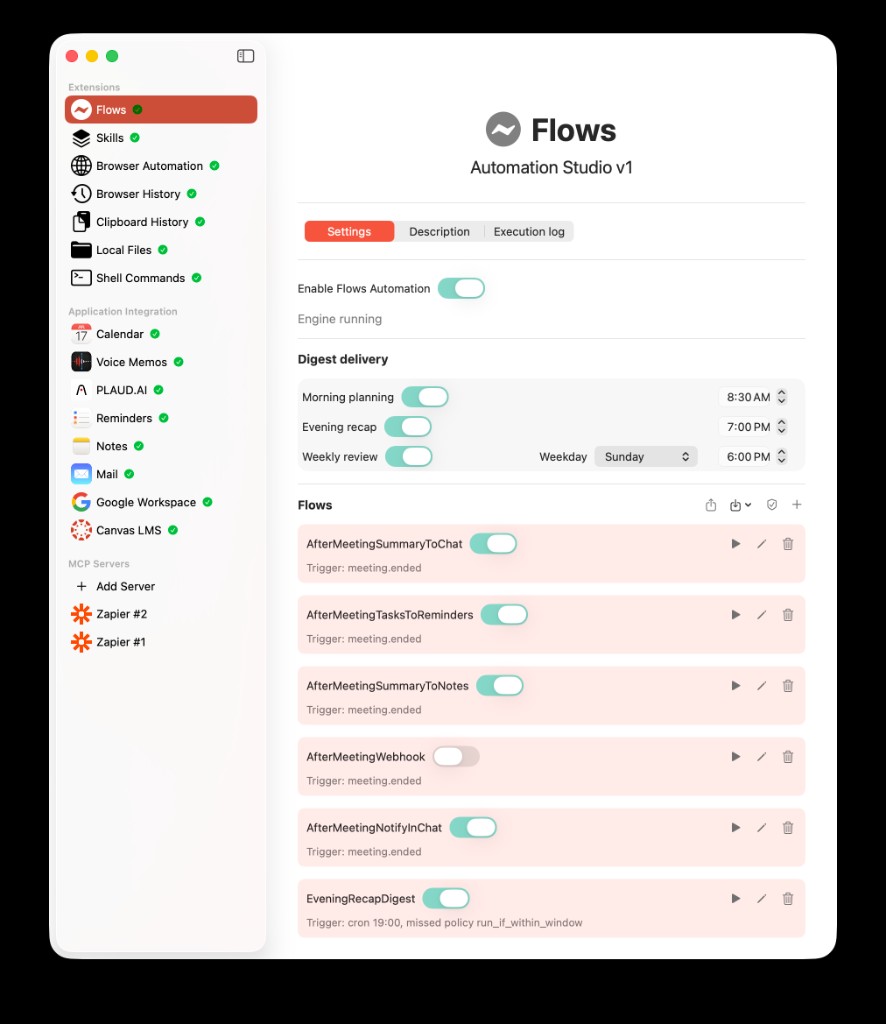
Enable the evening recap under Digest delivery on the Flows list. Edit EveningRecapDigest in the Flow Editor to change Output, Chat, Trigger, or the Smart daily digest Mode.
The useful part is picking a time when you will actually read it. A digest that arrives while you still have two minutes of attention beats one that lands after you have already checked out for the night.
For the automation layer behind digests, read How to Automate Repetitive Student Work with AideAI Flows.
A Three-Minute Shutdown Ritual
You do not need a long nightly review.
Try this:
- Read the recap once. Do not reopen every app to verify it.
- Name one carryover. What should tomorrow inherit first?
- Drop one thing intentionally. Not everything open deserves tomorrow's first hour.
- Use chat only if needed. Ask for a smaller handoff, not a full replan.
- Let morning planning take over tomorrow. If mornings are your weak point too, pair this with How to Start Your Study Day With a Morning Planning Digest.
The goal is not to end every day feeling accomplished. The goal is to end the day without leaving important work in an ambiguous state.
When An Evening Recap Helps Most
This workflow is especially useful if:
- you often wake up unsure what was left unresolved
- your days feel busy but rarely feel closed
- unfinished work keeps reappearing as vague stress
- you want less rediscovery time at the start of each study session
- you are in a heavy week and need continuity more than motivation
It helps less if your main problem is semester-wide drift rather than day-to-day handoffs. In that case, add a weekly review digest after the daily rhythm feels stable.
Try The Evening Recap In AideAI
If your study days stop abruptly instead of handing off cleanly, an evening recap digest gives tomorrow a better starting point than memory, scattered notes, or hope.
Enable Evening recap under Digest delivery, pick a time that matches your real evenings, and use the brief to name one carryover before you close the day.
For the full digest system, read How to Use a Daily and Weekly Study Digest to Stay on Top of College. To compare plans, visit Pricing.